
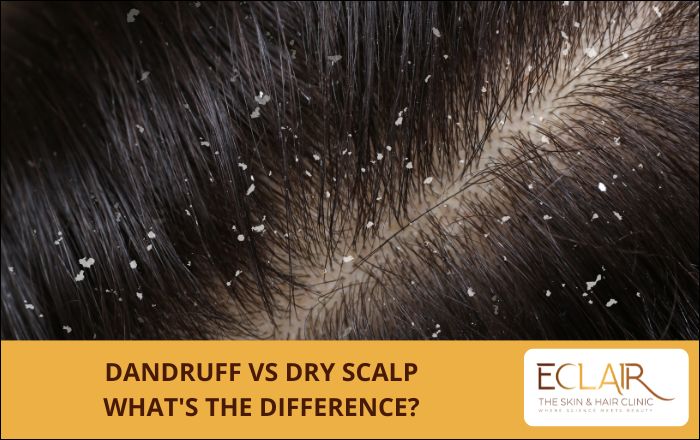
Seeing white flakes on your shoulders can be frustrating, but not every flaky scalp is dandruff. Dry scalp and dandruff can look similar, yet they have different causes and often need different care. Understanding the difference can help you choose the right treatment instead of trying products that may not address the real problem.
What Is a Dry Scalp?
A dry scalp usually occurs when the scalp does not retain enough moisture. Cold weather, low humidity, hot showers, harsh shampoos, frequent washing, or excessive use of styling products can strip natural oils from the scalp.
The flakes caused by a dry scalp are generally small, fine, and white. You may also notice tightness, mild itching, or a rough feeling on the scalp. In many cases, the hair itself may feel dry or brittle.
If your scalp feels dry after washing and improves when you switch to a gentle, moisturizing shampoo, dryness may be the main issue.
What Is Dandruff?
Dandruff is different. It is commonly associated with an overgrowth or imbalance of Malassezia, a yeast naturally present on the scalp. Excess oil, scalp sensitivity, and inflammation can contribute to dandruff.
Dandruff flakes are often larger, more noticeable, and sometimes yellowish or oily. Itching is also common. Unlike simple dryness, dandruff can continue even when you moisturize your scalp.
Some people experience recurring dandruff, particularly when the scalp becomes oily or during periods of stress or seasonal changes.
Dandruff vs Dry Scalp: Key Differences
One of the easiest ways to understand the difference is to look at the condition of your scalp.
Dry scalp:
- Usually linked to moisture loss
- Produces small, dry white flakes
- Scalp may feel tight or dry
- Hair may also feel dry
- Often improves with gentle, moisturizing care
Dandruff:
- Often linked to yeast imbalance, oiliness, and inflammation
- Flakes may be larger and oily or yellowish
- Itching can be more noticeable
- Scalp may appear greasy or irritated
- Often requires an anti-dandruff treatment
However, symptoms can overlap. Conditions such as seborrheic dermatitis, psoriasis, eczema, or scalp infections can also cause flaking and itching. This is why persistent symptoms should not always be assumed to be ordinary dandruff.
How Can You Tell Which One You Have?
Pay attention to what your scalp feels and looks like. If you have fine flakes with an overall dry, tight scalp, dryness may be responsible. If your scalp is oily, itchy, irritated, and produces recurring flakes, dandruff may be more likely.
Your shampoo routine can also provide clues. Washing your hair with very hot water or using strong cleansing products frequently can worsen a dry scalp. On the other hand, repeatedly using unsuitable hair products without addressing an underlying scalp condition may not resolve dandruff.
When symptoms continue despite basic scalp care, a dermatologist can examine the scalp and determine the likely cause.
What Can Help?
For a dry scalp, focus on gentle scalp care. Use a mild shampoo, avoid very hot water, reduce unnecessary heat styling, and consider a moisturizing hair-care routine suited to your scalp.
For dandruff, an appropriate anti-dandruff or medicated shampoo may help control flakes and scalp irritation. Ingredients such as ketoconazole, zinc pyrithione, selenium sulfide, or salicylic acid may be recommended depending on the condition.
Avoid aggressively scratching or picking flakes. This can irritate the scalp and potentially cause small breaks in the skin.
When Should You See a Dermatologist?
If dandruff is severe, keeps returning, causes significant itching or redness, or does not improve with appropriate home care, professional evaluation is worthwhile. You should also seek dermatological advice if you notice thick scales, sores, hair loss, swelling, or signs of infection.
Dandruff Treatment in Kharadi
For people looking for dandruff treatment in Kharadi, Eclair The Skin & Hair Clinic provides dermatological care focused on identifying the underlying cause of scalp flaking and irritation. Rather than treating every flaky scalp as simple dandruff, a dermatologist can assess whether the problem is dandruff, dry scalp, seborrheic dermatitis, or another scalp condition and recommend appropriate treatment.
FAQs
1. Is dandruff caused by a dry scalp?
Not necessarily. Dandruff and dry scalp are different conditions, although their symptoms can overlap.
2. How can I tell if my scalp is dry or has dandruff?
Dry scalp usually causes fine flakes and tightness, while dandruff often causes larger flakes with itching and an oily scalp.
3. Can washing hair too often cause a dry scalp?
Yes. Frequent washing, especially with harsh shampoos or hot water, can remove natural oils and increase dryness.
4. Does dandruff go away permanently?
Dandruff can often be controlled, but it may recur and require ongoing scalp-care measures.
5. When should I see a dermatologist for dandruff?
See a dermatologist if dandruff is persistent, severe, very itchy, inflamed, or accompanied by sores or hair loss.