
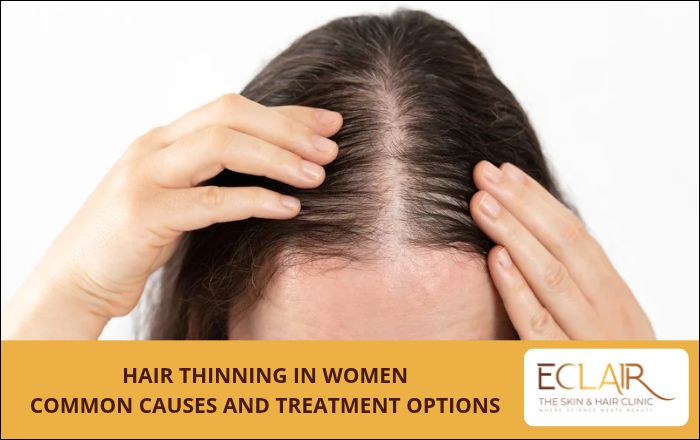
Hair thinning in women is commonly caused by female pattern hair loss, temporary shedding after stress, illness or childbirth (telogen effluvium), hormonal conditions such as PCOS and thyroid disorders, iron or vitamin deficiencies, tight hairstyles and some medicines. Treatment depends on the cause and may include correcting deficiencies, managing hormonal conditions, topical or oral medicines prescribed by a doctor, and procedures such as PRP in selected cases. Because several causes can overlap, a proper scalp examination and, often, blood tests are the first step. This guide explains the common causes of hair thinning in women, the signs to watch for and the treatment options you can discuss with a doctor. How Hair Grows and Sheds Each hair follicle goes through a growth phase (anagen) lasting several years, a short transition phase and a resting phase (telogen), after which the hair falls out and a new one begins to grow. Losing around 50 to 100 hairs a day is normal. Thinning happens when more hairs shift into the resting phase, or when follicles gradually produce finer, shorter hairs. Signs of Hair Thinning in Women A widening centre parting More scalp visible on the crown or centre of the head A thinner ponytail Increased hair on the pillow, comb or in the shower drain Finer, weaker hair strands Receding hair around the temples in some women Common Causes of Hair Thinning in Women Female pattern hair loss This is a gradual thinning over the crown and centre of the scalp, usually with the front hairline preserved. Genetics and sensitivity of hair follicles to hormones play a role. It can begin at any age after puberty and becomes more common after menopause. Telogen effluvium A sudden increase in shedding can happen two to three months after a trigger such as high fever, surgery, childbirth, crash dieting, major emotional stress or stopping hormonal pills. Our article on whether stress can cause hair fall explains this link. Hormonal conditions PCOS: higher androgen levels can cause scalp thinning along with acne and excess facial hair Thyroid disorders: both underactive and overactive thyroid can cause diffuse shedding Menopause: falling oestrogen levels can make hair finer Nutritional deficiencies Low iron stores, vitamin D, vitamin B12, protein or zinc may contribute to hair shedding. Very restrictive diets can also trigger hair loss. Hair care practices Tight ponytails, braids and buns can cause traction alopecia around the hairline. Frequent heat styling, bleaching and harsh chemical treatments can make hair break. Scalp conditions Dandruff, seborrhoeic dermatitis, fungal infections and psoriasis can affect scalp health. Patchy hair loss may be due to alopecia areata, an autoimmune condition. Medicines and medical conditions Some medicines, anaemia, autoimmune conditions and recent illnesses can contribute to hair thinning. Do not stop prescribed medicines without speaking to your doctor. How Is Hair Thinning Evaluated? An evaluation usually includes: History of when the thinning started, any triggers, diet, periods, pregnancy and medicines Scalp examination, sometimes with a magnifying tool (trichoscopy) A gentle hair pull test to assess shedding Blood tests as advised, such as haemoglobin, ferritin, thyroid function, vitamin D, vitamin B12 and hormone tests when PCOS is suspected When the cause is unclear or the pattern suggests a scalp disease, referral to a dermatologist may be advised. Treatment Options for Hair Thinning in Women Treating the underlying cause Correcting iron or vitamin deficiencies, managing thyroid disorders or PCOS with your doctor and allowing time for recovery after a trigger are important first steps. In telogen effluvium, hair often recovers over several months once the trigger has passed. Medicines Topical and oral medicines may be prescribed for female pattern hair loss by a qualified doctor. They usually need consistent use over months, and the doctor will explain possible side effects and precautions, especially if you are pregnant or planning pregnancy. PRP therapy Platelet-rich plasma uses a concentrate from your own blood, injected into the scalp. It is one of the options sometimes considered for certain types of thinning. Responses vary, and it is generally discussed after the cause has been assessed. Learn more about how PRP hair treatment works and how it compares in PRP vs mesotherapy. Other supportive measures A balanced diet with adequate protein, iron-rich foods, fruits and vegetables Gentle hair care: loose hairstyles, minimal heat styling and mild shampoos Treating dandruff or scalp inflammation Stress management, sleep and regular physical activity Avoid starting supplements or online remedies without advice, as excess intake of some vitamins can cause harm. When Should You Seek Help? Shedding lasts more than three months You notice patches of hair loss Thinning comes with irregular periods, acne or excess facial hair There is scalp pain, redness, scaling or scarring Hair loss is affecting your confidence or daily life Frequently Asked Questions Is it normal for women to lose hair every day? Yes. Losing around 50 to 100 hairs a day is considered normal as part of the hair growth cycle. Noticeably more shedding, a widening parting or visible scalp may suggest hair thinning that is worth checking. What is the most common cause of hair thinning in women? Female pattern hair loss, which causes gradual thinning over the centre of the scalp with a widening parting, is one of the most common causes. Temporary shedding after illness, childbirth or stress (telogen effluvium) is also common. Can thyroid problems or low iron cause hair thinning? Yes. Both underactive and overactive thyroid, as well as iron deficiency, can contribute to hair shedding. Blood tests can check for these, and treating the underlying cause is an important part of management. Does PCOS cause hair thinning? PCOS can raise androgen levels, which may cause thinning on the scalp in some women, along with irregular periods, acne or excess facial hair. Managing PCOS with your doctor is part of addressing the hair changes. Does hair grow back after postpartum hair fall? Hair shedding a few months after childbirth is common and usually settles over several months as hormone levels stabilise. If shedding continues beyond a
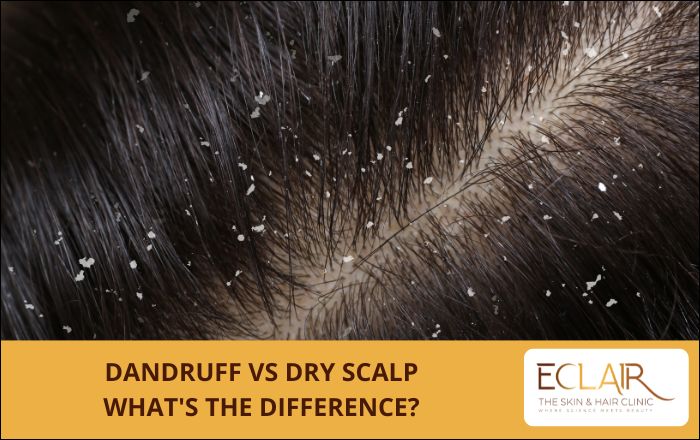
Dandruff vs Dry Scalp: What’s the Difference?
Seeing white flakes on your shoulders can be frustrating, but not every flaky scalp is dandruff. Dry scalp and dandruff can look similar, yet they have different causes and often need different care. Understanding the difference can help you choose the right treatment instead of trying products that may not address the real problem. What Is a Dry Scalp? A dry scalp usually occurs when the scalp does not retain enough moisture. Cold weather, low humidity, hot showers, harsh shampoos, frequent washing, or excessive use of styling products can strip natural oils from the scalp. The flakes caused by a dry scalp are generally small, fine, and white. You may also notice tightness, mild itching, or a rough feeling on the scalp. In many cases, the hair itself may feel dry or brittle. If your scalp feels dry after washing and improves when you switch to a gentle, moisturizing shampoo, dryness may be the main issue. What Is Dandruff? Dandruff is different. It is commonly associated with an overgrowth or imbalance of Malassezia, a yeast naturally present on the scalp. Excess oil, scalp sensitivity, and inflammation can contribute to dandruff. Dandruff flakes are often larger, more noticeable, and sometimes yellowish or oily. Itching is also common. Unlike simple dryness, dandruff can continue even when you moisturize your scalp. Some people experience recurring dandruff, particularly when the scalp becomes oily or during periods of stress or seasonal changes. Dandruff vs Dry Scalp: Key Differences One of the easiest ways to understand the difference is to look at the condition of your scalp. Dry scalp: Usually linked to moisture loss Produces small, dry white flakes Scalp may feel tight or dry Hair may also feel dry Often improves with gentle, moisturizing care Dandruff: Often linked to yeast imbalance, oiliness, and inflammation Flakes may be larger and oily or yellowish Itching can be more noticeable Scalp may appear greasy or irritated Often requires an anti-dandruff treatment However, symptoms can overlap. Conditions such as seborrheic dermatitis, psoriasis, eczema, or scalp infections can also cause flaking and itching. This is why persistent symptoms should not always be assumed to be ordinary dandruff. How Can You Tell Which One You Have? Pay attention to what your scalp feels and looks like. If you have fine flakes with an overall dry, tight scalp, dryness may be responsible. If your scalp is oily, itchy, irritated, and produces recurring flakes, dandruff may be more likely. Your shampoo routine can also provide clues. Washing your hair with very hot water or using strong cleansing products frequently can worsen a dry scalp. On the other hand, repeatedly using unsuitable hair products without addressing an underlying scalp condition may not resolve dandruff. When symptoms continue despite basic scalp care, a dermatologist can examine the scalp and determine the likely cause. What Can Help? For a dry scalp, focus on gentle scalp care. Use a mild shampoo, avoid very hot water, reduce unnecessary heat styling, and consider a moisturizing hair-care routine suited to your scalp. For dandruff, an appropriate anti-dandruff or medicated shampoo may help control flakes and scalp irritation. Ingredients such as ketoconazole, zinc pyrithione, selenium sulfide, or salicylic acid may be recommended depending on the condition. Avoid aggressively scratching or picking flakes. This can irritate the scalp and potentially cause small breaks in the skin. When Should You See a Dermatologist? If dandruff is severe, keeps returning, causes significant itching or redness, or does not improve with appropriate home care, professional evaluation is worthwhile. You should also seek dermatological advice if you notice thick scales, sores, hair loss, swelling, or signs of infection. Dandruff Treatment in Kharadi For people looking for dandruff treatment in Kharadi, Eclair The Skin & Hair Clinic provides dermatological care focused on identifying the underlying cause of scalp flaking and irritation. Rather than treating every flaky scalp as simple dandruff, a dermatologist can assess whether the problem is dandruff, dry scalp, seborrheic dermatitis, or another scalp condition and recommend appropriate treatment. FAQs 1. Is dandruff caused by a dry scalp?Not necessarily. Dandruff and dry scalp are different conditions, although their symptoms can overlap. 2. How can I tell if my scalp is dry or has dandruff?Dry scalp usually causes fine flakes and tightness, while dandruff often causes larger flakes with itching and an oily scalp. 3. Can washing hair too often cause a dry scalp?Yes. Frequent washing, especially with harsh shampoos or hot water, can remove natural oils and increase dryness. 4. Does dandruff go away permanently?Dandruff can often be controlled, but it may recur and require ongoing scalp-care measures. 5. When should I see a dermatologist for dandruff?See a dermatologist if dandruff is persistent, severe, very itchy, inflamed, or accompanied by sores or hair loss.