
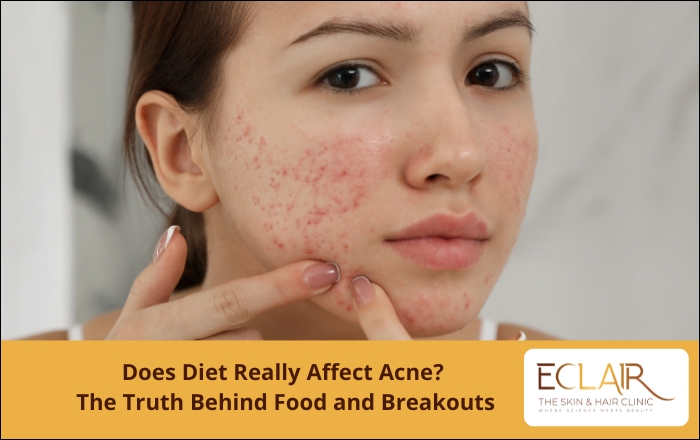
Acne is one of the most common skin concerns affecting teenagers and adults alike. While hormones, genetics, stress, and skincare habits are well-known causes, one question continues to spark debate:
Does diet really affect acne?
The answer is yes—but not in the way many people believe. Modern research suggests that certain dietary habits can influence acne in some individuals, while others may have little to no effect. Understanding this connection can help you make better lifestyle choices and achieve healthier skin.
If you’re struggling with persistent acne in Kharadi, consulting an experienced skin specialist can help identify the root cause and create a personalized treatment plan.
Understanding Acne
Acne develops when:
- Excess oil (sebum) is produced
- Dead skin cells clog pores
- Bacteria multiply inside blocked follicles
- Inflammation causes pimples, blackheads, whiteheads, or cysts
While food alone doesn’t cause acne, certain foods can increase inflammation, oil production, or hormonal activity that may worsen breakouts.
Foods That May Trigger Acne
1. High Glycemic Index (GI) Foods
Foods that rapidly increase blood sugar levels may trigger hormonal changes that stimulate oil production.
Examples include:
- White bread
- White rice
- Sugary cereals
- Cakes and pastries
- Soft drinks
- Candy
High blood sugar increases insulin levels, which may encourage the skin to produce more sebum, leading to clogged pores.
2. Sugary Foods and Drinks
Excess sugar promotes inflammation throughout the body.
Common examples include:
- Chocolates with high sugar content
- Ice cream
- Packaged juices
- Sweetened beverages
- Desserts
Reducing sugar intake may help decrease acne flare-ups in susceptible individuals.
3. Dairy Products
Some studies suggest that milk, especially skim milk, may worsen acne in certain people.
Possible reasons include:
- Hormonal components present in milk
- Increased insulin-like growth factor (IGF-1)
- Stimulation of oil glands
However, not everyone experiences acne from dairy. Individual responses vary significantly.
4. Fast Food and Processed Foods
Highly processed foods are often rich in:
- Refined carbohydrates
- Saturated fats
- Trans fats
- Artificial additives
These foods may contribute to inflammation, making acne more severe.
Foods That May Help Improve Acne
A balanced diet supports overall skin health.
Fresh Fruits and Vegetables
Rich in antioxidants, vitamins, and minerals, these foods help reduce inflammation.
Good choices include:
- Spinach
- Broccoli
- Carrots
- Tomatoes
- Oranges
- Berries
- Papaya
Omega-3 Fatty Acids
Omega-3s possess anti-inflammatory properties.
Sources include:
- Salmon
- Sardines
- Walnuts
- Flaxseeds
- Chia seeds
Zinc-Rich Foods
Zinc plays an important role in skin healing.
Include foods like:
- Pumpkin seeds
- Chickpeas
- Lentils
- Eggs
- Lean meat
Probiotic Foods
Healthy gut bacteria may help reduce inflammation.
Examples include:
- Yogurt (if tolerated)
- Kefir
- Fermented foods
Does Chocolate Cause Acne?
This is one of the most common myths.
Pure dark chocolate itself is not proven to directly cause acne.
However, chocolates that contain:
- High sugar
- Milk solids
- Processed ingredients
may contribute to breakouts in some individuals.
Moderation is the key.
Does Drinking More Water Cure Acne?
Water is essential for overall health and skin hydration.
However, drinking excessive water alone will not eliminate acne.
Good hydration supports healthy skin, but acne usually requires a combination of:
- Proper skincare
- Healthy diet
- Medical treatment when needed
Can Supplements Help?
Certain supplements may improve skin health when prescribed appropriately.
Examples include:
- Zinc
- Omega-3 fatty acids
- Vitamin D (if deficient)
Avoid self-medicating, as excessive supplementation may cause side effects.
Lifestyle Habits That Improve Acne
Diet is only one part of acne management.
For clearer skin:
- Wash your face twice daily with a gentle cleanser.
- Avoid picking or squeezing pimples.
- Use non-comedogenic skincare products.
- Sleep for 7–8 hours every night.
- Exercise regularly.
- Manage stress through meditation or yoga.
- Stay hydrated.
- Follow a balanced diet rich in whole foods.
When Should You See a Skin Specialist?
Consult a dermatologist if you experience:
- Painful cystic acne
- Frequent acne breakouts
- Acne scars
- Pimples that don’t improve after several months
- Sudden severe acne in adulthood
Early treatment helps prevent permanent scarring and improves long-term skin health.
Professional Acne Treatments
Depending on your skin condition, your dermatologist may recommend:
- Medical-grade topical creams
- Oral medications
- Chemical peels
- Acne scar treatments
- Laser therapy
- Microneedling
- PRP-based skin rejuvenation (for selected cases)
A personalized treatment plan offers the best results.
Frequently Asked Questions (FAQs)
Does eating oily food directly cause acne?
Not necessarily. While oily foods don’t directly create acne, unhealthy eating habits and processed foods may worsen inflammation and contribute to breakouts in some people.
Can stopping dairy completely cure acne?
No. Dairy affects individuals differently. If you notice repeated breakouts after consuming dairy, consult a dermatologist before making major dietary changes.
How long does it take to notice improvements after changing my diet?
Skin typically takes 6–12 weeks to reflect dietary and lifestyle changes, although individual results vary.
Is acne only caused by diet?
No. Acne is influenced by hormones, genetics, stress, skincare habits, medications, and environmental factors in addition to diet.
Which diet is best for acne-prone skin?
A balanced diet rich in vegetables, fruits, lean proteins, whole grains, healthy fats, and low-glycemic foods is generally recommended for healthy skin.
Diet can influence acne, but it is rarely the only cause. Choosing nutrient-rich foods, limiting high-sugar and processed foods, staying hydrated, and maintaining a healthy lifestyle can support clearer skin. If acne persists despite lifestyle changes, seeking professional dermatological care is the most effective way to prevent long-term skin damage and achieve healthier skin.
About Dr. Nikita Surve – Skin Specialist in Kharadi
If you’re experiencing persistent acne, acne scars, pigmentation, hair loss, or other skin concerns, Dr. Nikita Surve offers personalized, evidence-based dermatology care tailored to your skin type and lifestyle. As a trusted Skin Specialist in Kharadi, Dr. Surve focuses on accurate diagnosis and advanced treatment options to help patients achieve healthier, clearer skin. Whether you’re looking for effective acne management, anti-aging solutions, or comprehensive skincare guidance, schedule a consultation with Dr. Nikita Surve for expert care and long-lasting results.