
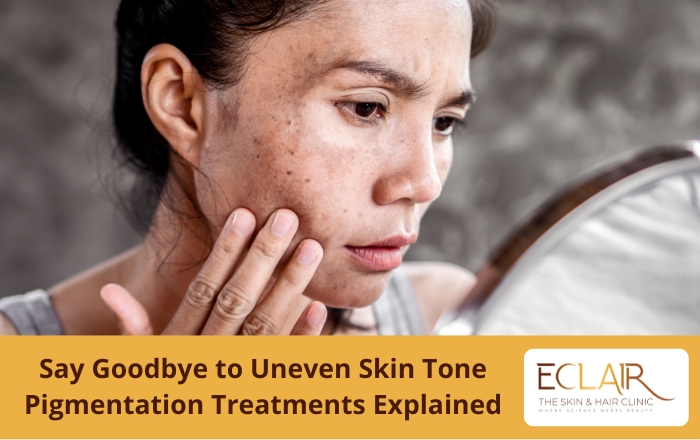
Do you notice dark patches, spots, or uneven skin tone on your face? This common skin problem is called pigmentation. It can affect anyone, at any age. The good news is that pigmentation can be treated with the right care and medical support. What Is Skin Pigmentation? Skin color is decided by a pigment called melanin. When your skin produces too much melanin in certain areas, it leads to dark spots or patches. This is called pigmentation. Pigmentation can appear on the face, neck, hands, or other body parts. Common Types of Pigmentation Here are the most common types: 1. Sun Spots These are dark spots caused by too much sun exposure. They are also called age spots. 2. Melasma Melasma causes brown or grey patches, usually on the cheeks, forehead, or upper lip. It is common during pregnancy or due to hormonal changes. 3. Post-Inflammatory Hyperpigmentation (PIH) These dark marks appear after acne, pimples, injuries, or skin irritation. 4. Freckles Small brown spots that often appear due to genetics and sun exposure. What Causes Pigmentation? Pigmentation can happen due to: Excess sun exposure Hormonal changes Acne or skin injuries Certain medicines Genetic factors Aging Understanding the cause is important for choosing the right treatment. Pigmentation Treatments Explained Modern dermatology offers safe and effective treatments to reduce pigmentation. Let’s understand them in simple terms: 1. Chemical Peels In this treatment, a special solution is applied to the skin. It removes the top damaged layer and helps fresh, clear skin come out. It is helpful for mild to moderate pigmentation. 2. Laser Treatment Laser targets the extra melanin in the skin and breaks it down. This helps reduce dark spots and improves overall skin tone. It is commonly used for deeper pigmentation. 3. Medicated Creams Dermatologists may prescribe creams that contain ingredients like kojic acid, retinoids, or vitamin C. These help lighten dark spots slowly and safely. 4. Microdermabrasion This is a gentle skin polishing treatment that removes dead skin cells and improves skin brightness. 5. Sunscreen and Skincare Routine Daily sunscreen is very important. Without sun protection, pigmentation can come back even after treatment. How Long Does It Take to See Results? Pigmentation treatment is not instant. Mild cases may improve in a few weeks, while deeper pigmentation may take a few months. Regular sessions and proper skincare are important for the best results. Can Pigmentation Be Prevented? Yes, you can reduce the chances of pigmentation by: Using sunscreen daily (SPF 30 or higher) Avoiding too much sun exposure Treating acne early Following a proper skincare routine Consulting a dermatologist for any skin changes Uneven skin tone can affect your confidence, but it is treatable. With the right diagnosis and professional treatment, you can achieve clearer and healthier skin. Always consult a qualified skin specialist to understand what works best for your skin type. Visit Eclair The Skin & Hair Clinic for Pigmentation Treatment in Kharadi If you are looking for professional pigmentation treatment in Kharadi, Eclair The Skin & Hair Clinic offers advanced and safe solutions for uneven skin tone, melasma, sun spots, and acne marks. With modern technology and personalized treatment plans, the clinic focuses on delivering natural-looking and long-lasting results. Visit : Eclair The Skin & Hair Clinic – Dr. Nikita Surve, Skin Specialist in Kharadi Address : Office No. 109 1st Floor, ZEN SQUARE, opp. Eon Free Zone Road, Phase II, Kharadi, Pune, Maharashtra 411014 Contact Number : +91 86260 96494